
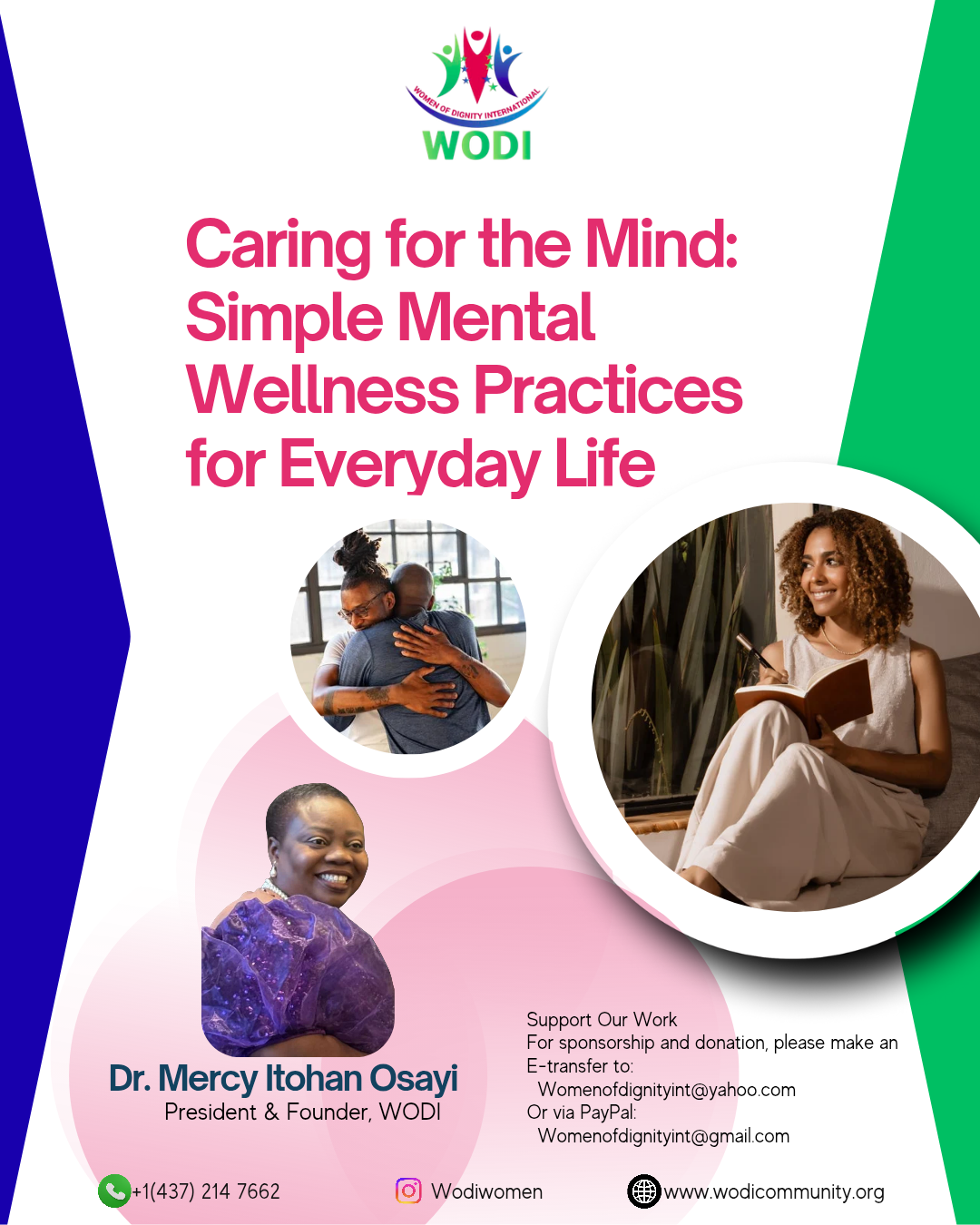
Caring for the Mind: Simple Mental Wellness Practices for Everyday Life
Jan 17 2026
Caring for the Mind: Simple Mental Wellness Practices for Everyday Life
Mental well-being is an essential part of a healthy and dignified life. Yet, in the midst of daily responsibilities, many people give little attention to their mental health until stress, exhaustion, or emotional strain becomes overwhelming. Mental wellness is not only about addressing crises—it is about maintaining balance, awareness, and emotional resilience in everyday life.
Understanding Mental Wellness
Mental wellness refers to the ability to cope with daily challenges, manage emotions, maintain healthy relationships, and make thoughtful decisions. It does not mean the absence of stress or difficulty, but the capacity to respond to life’s demands in healthy ways.
Everyone, regardless of age or background, benefits from paying attention to their mental state.
The Importance of Everyday Practices
Mental wellness is often supported by simple, consistent habits rather than complex solutions. Small actions, practiced regularly, can significantly reduce stress and improve emotional clarity.
Examples include:
* Taking short breaks during the day
* Getting adequate rest and sleep
* Creating moments of quiet or reflection
* Limiting constant exposure to negative or overwhelming information
These practices help the mind reset and recharge.
Managing Stress in a Healthy Way
Stress is a normal part of life, but unmanaged stress can affect both mental and physical health. Learning to recognize early signs of stress—such as irritability, fatigue, or lack of focus—allows individuals to respond before it escalates.
Healthy stress management may involve physical movement, creative activities, journaling, or talking to someone trustworthy. Seeking support is a sign of awareness, not weakness.
The Role of Connection
Human connection plays a vital role in mental well-being. Meaningful conversations, shared experiences, and supportive relationships provide emotional stability. Taking time to connect with others—whether family, friends, or community members—helps reduce isolation and promotes emotional balance.
Respectful and empathetic communication strengthens both individual and collective dignity.
A Weekend Reflection
Weekends offer a valuable opportunity to slow down and reflect. Consider asking yourself:
* How has my mind been feeling this week?
* What activities help me feel calm and focused?
* What small change can improve my mental well-being?
At WODI, we encourage everyone to view mental wellness as a lifelong practice. Caring for the mind is not optional—it is essential to living with dignity, clarity, and purpose.
A healthy mind supports a balanced life.