
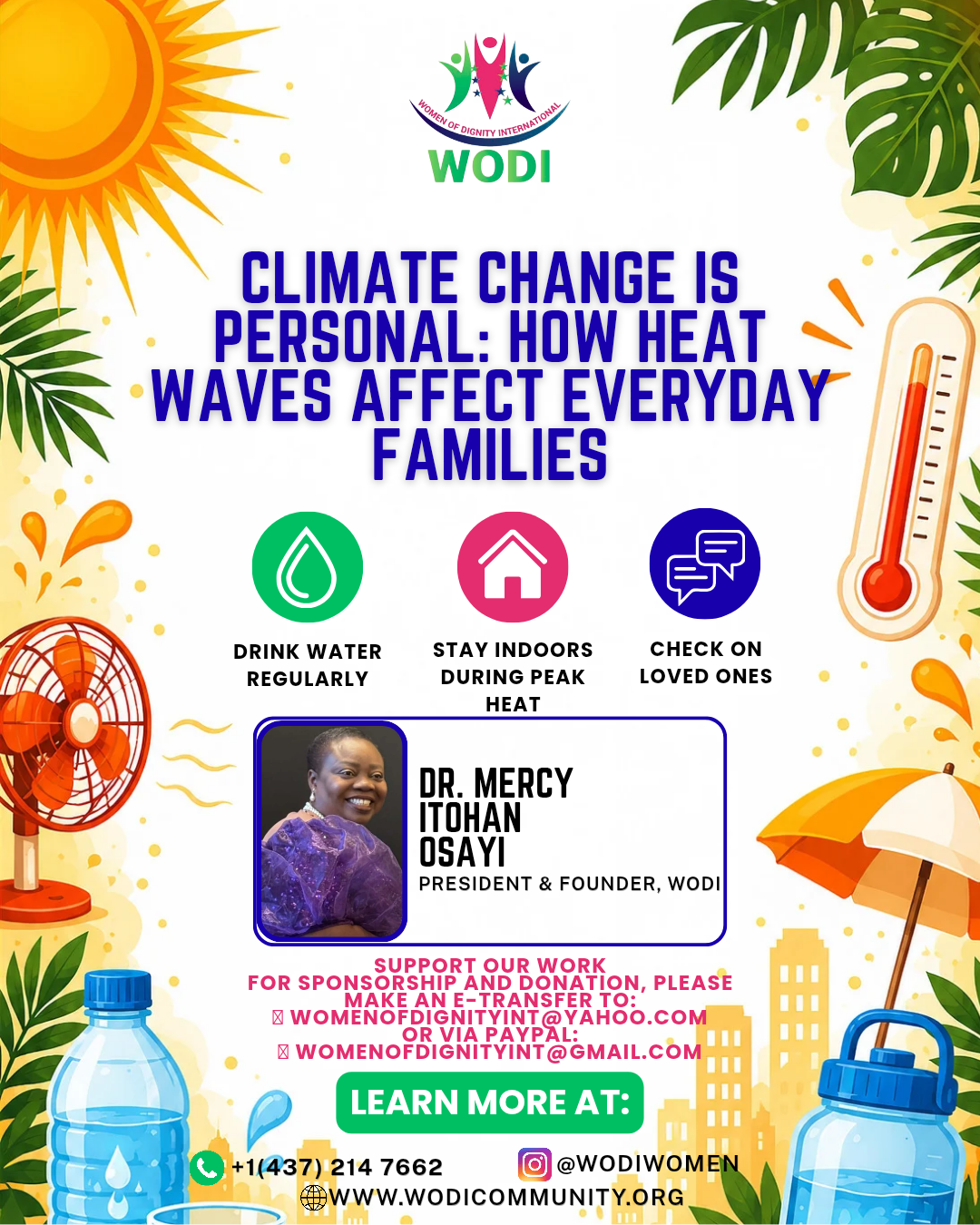
Climate Change Is Personal: How Heat Waves Affect Everyday Families
Jul 11 2026
Climate Change Is Personal: How Heat Waves Affect Everyday Families
When people hear the words climate change, they often think of melting glaciers, rising sea levels, or distant environmental disasters. While these are real concerns, climate change is much closer to home than many realize. It is felt in our neighbourhoods, our workplaces, our schools, and most importantly, in our homes.
One of the clearest signs is the increasing number of heat waves. Summers are becoming hotter, and periods of extreme heat are lasting longer than they once did. What used to be an uncomfortable inconvenience is now becoming a serious public health concern, especially for children, older adults, people with chronic illnesses, outdoor workers, and families with limited access to cooling.
Extreme heat affects more than our comfort. It can lead to dehydration, heat exhaustion, heatstroke, poor sleep, reduced productivity, and worsening health conditions. For many parents, it means keeping children safe indoors during peak temperatures. For seniors, it can become a matter of life and death if they live alone or without proper ventilation. For caregivers, every hot day brings added responsibility and concern.
The financial impact is also significant. Higher electricity bills from cooling homes, increased water consumption, and the cost of replacing damaged crops or dealing with food shortages place additional pressure on families already struggling with the rising cost of living. Climate change is not just an environmental issue—it is an economic and social issue that affects everyone.
The good news is that every household can take practical steps to reduce the impact of extreme heat. Drinking enough water, avoiding outdoor activities during the hottest hours of the day, checking on elderly neighbours, wearing light clothing, planting trees, reducing unnecessary energy use, and creating shaded outdoor spaces are simple actions that can make a meaningful difference.
Communities also have an important role to play. Local organizations, schools, healthcare providers, and community groups can work together to raise awareness, support vulnerable residents, and promote climate-smart practices. Something as simple as calling an elderly neighbour during a heat wave or sharing information about cooling centres can save lives.
Climate action does not always begin with large policies or international agreements. It often begins with everyday choices made in our homes. Teaching children to care for the environment, reducing waste, planting home gardens, conserving water, and supporting local environmental initiatives all contribute to a healthier future.
We must also remember that protecting the environment is about protecting people. Every effort to reduce the effects of climate change is an investment in healthier families, safer communities, and a more secure future for generations to come.
Climate change may be global, but its impact is deeply personal. The actions we take today—no matter how small—can help build communities that are more resilient, more compassionate, and better prepared for the challenges ahead.
After all, caring for our planet begins with caring for the people who call it home.
WODI: Building an inclusive community for Women and Families!