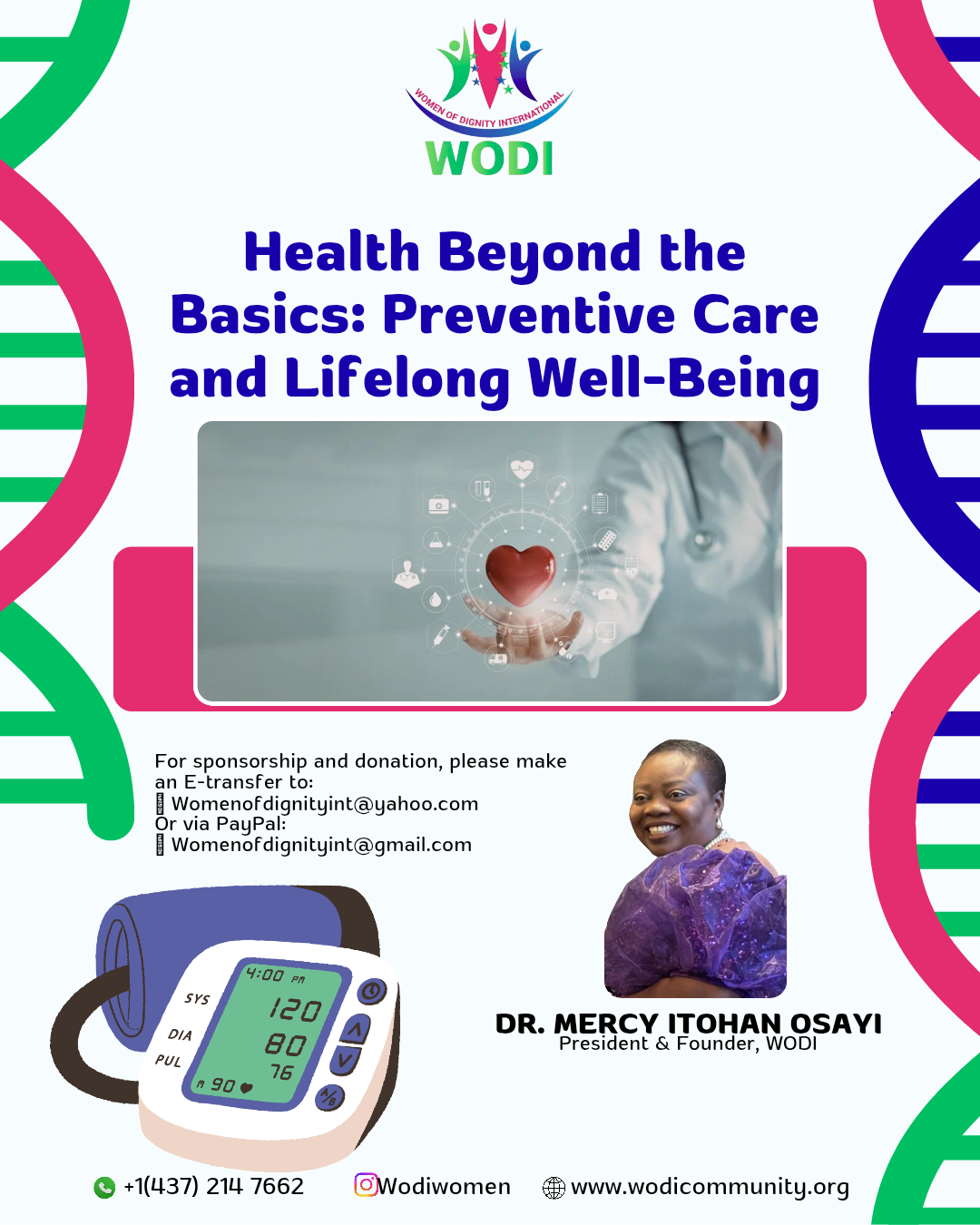
Health Beyond the Basics: Preventive Care and Lifelong Well-Being
Feb 18 2026
Health Beyond the Basics: Preventive Care and Lifelong Well-Being
Health is often approached reactively—addressed only when something goes wrong. However, true well-being goes beyond treating illness. It involves intentional preventive care that supports the body, mind, and lifestyle over the long term.
Living with dignity includes taking responsibility for one’s health, not just in moments of crisis, but as a continuous commitment.
Understanding Preventive Care
Preventive care focuses on reducing health risks before they become serious problems. It includes regular check-ups, healthy habits, early detection, and informed lifestyle choices.
Preventive care is not limited to medical appointments; it also involves daily decisions that influence long-term outcomes.
Examples include:
- Routine health screenings
- Balanced nutrition
- Physical activity
- Stress management
- Adequate rest and recovery
Why Prevention Matters
Many chronic conditions develop gradually and can be managed or even avoided through early action. Preventive care helps individuals stay active, productive, and engaged across all stages of life.
Benefits of preventive care include:
- Early detection of potential health concerns
- Reduced long-term medical costs
- Improved quality of life
- Increased energy and mental clarity
Prevention empowers individuals to take control rather than react under pressure.
Health as a Lifelong Investment
Health is not a short-term goal—it is a lifelong investment. Habits formed today influence strength, mobility, and resilience in later years.
Small, consistent actions such as daily movement, hydration, and mindful eating can create lasting benefits over time.
The Role of Mental and Emotional Well-Being
Preventive care also includes mental and emotional health. Chronic stress, unresolved emotions, and burnout can weaken physical health and overall functioning.
Prioritising emotional well-being through rest, connection, reflection, and support is essential for holistic health.
Community and Health Awareness
Health education and shared knowledge play an important role in prevention. Communities that promote awareness, support, and access to resources create healthier environments for everyone.
At Women of Dignity International (WODI), health is viewed as a foundation for dignity, productivity, and meaningful contribution to society.
A Reflection for Today
Consider:
What preventive habits am I currently practising?
What small change could improve my long-term health?
How do I prioritise rest and recovery?
Health beyond the basics is not about perfection—it is about consistency, awareness, and care over time.