
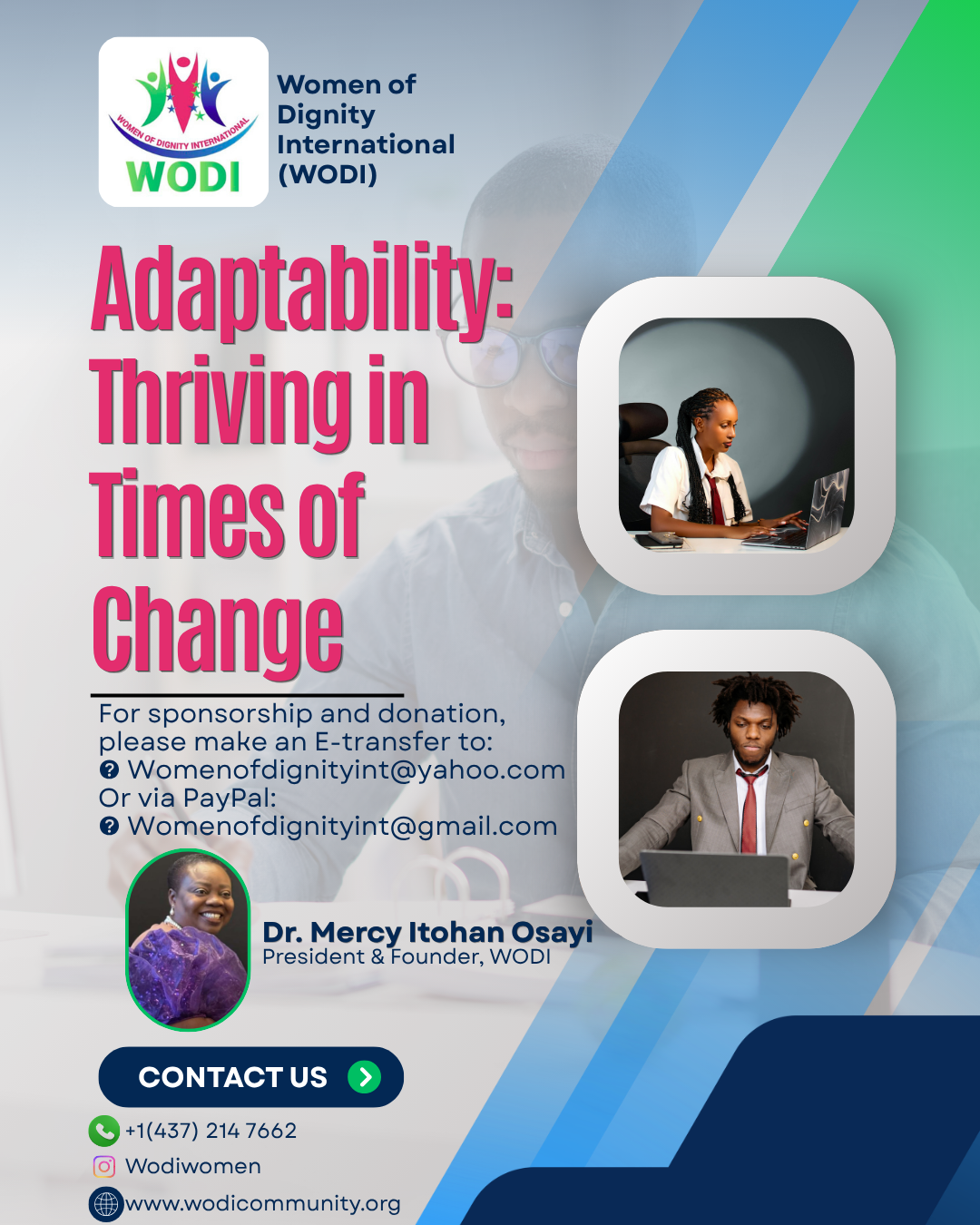
Adaptability: Thriving in Times of Change
Mar 28 2026
Adaptability: Thriving in Times of Change
Change is a constant part of life. Whether in work, relationships, or personal growth, situations evolve, expectations shift, and new challenges emerge. The ability to adapt is what allows individuals not just to cope, but to thrive.
Adaptability is no longer optional—it is a necessary life skill.
What Does It Mean to Be Adaptable?
Adaptability is the ability to adjust your mindset, actions, and expectations in response to changing circumstances. It involves flexibility, openness to learning, and the willingness to move forward even when things are uncertain.
Being adaptable means:
- Accepting change rather than resisting it
- Learning new ways of doing things
- Remaining calm under pressure
- Adjusting plans when necessary
It is about staying steady while navigating change.
Why Adaptability Matters
In a fast-changing world, those who adapt quickly are better positioned to grow and succeed. Rigid thinking can limit progress, while flexibility opens doors to new opportunities.
Adaptability helps individuals to:
- Handle uncertainty with confidence
- Stay productive during transitions
- Learn from new experiences
- Overcome unexpected challenges
Letting Go of Control
One of the biggest challenges in adapting is letting go of the need to control everything. Not all situations can be predicted or managed perfectly.
Adaptability requires trust—trust in your ability to respond, adjust, and learn as situations unfold.
Building Adaptability Daily
Adaptability can be developed through simple habits:
- Staying open to new ideas and perspectives
- Learning continuously
- Reflecting on experiences and lessons
- Practising patience during change
Small adjustments over time strengthen resilience and flexibility.
Adaptability and Dignity
Adapting to change with a calm and positive mindset reflects emotional maturity and self-control. It allows individuals to respond thoughtfully rather than react impulsively.
At Women of Dignity International (WODI), adaptability is recognised as a key quality for leadership, resilience, and sustainable growth.
A Reflection for Today
Ask yourself:
- How do I usually respond to change?
- Where do I need to be more flexible?
- What new approach can I try today?
Adaptability turns uncertainty into opportunity and change into growth.