
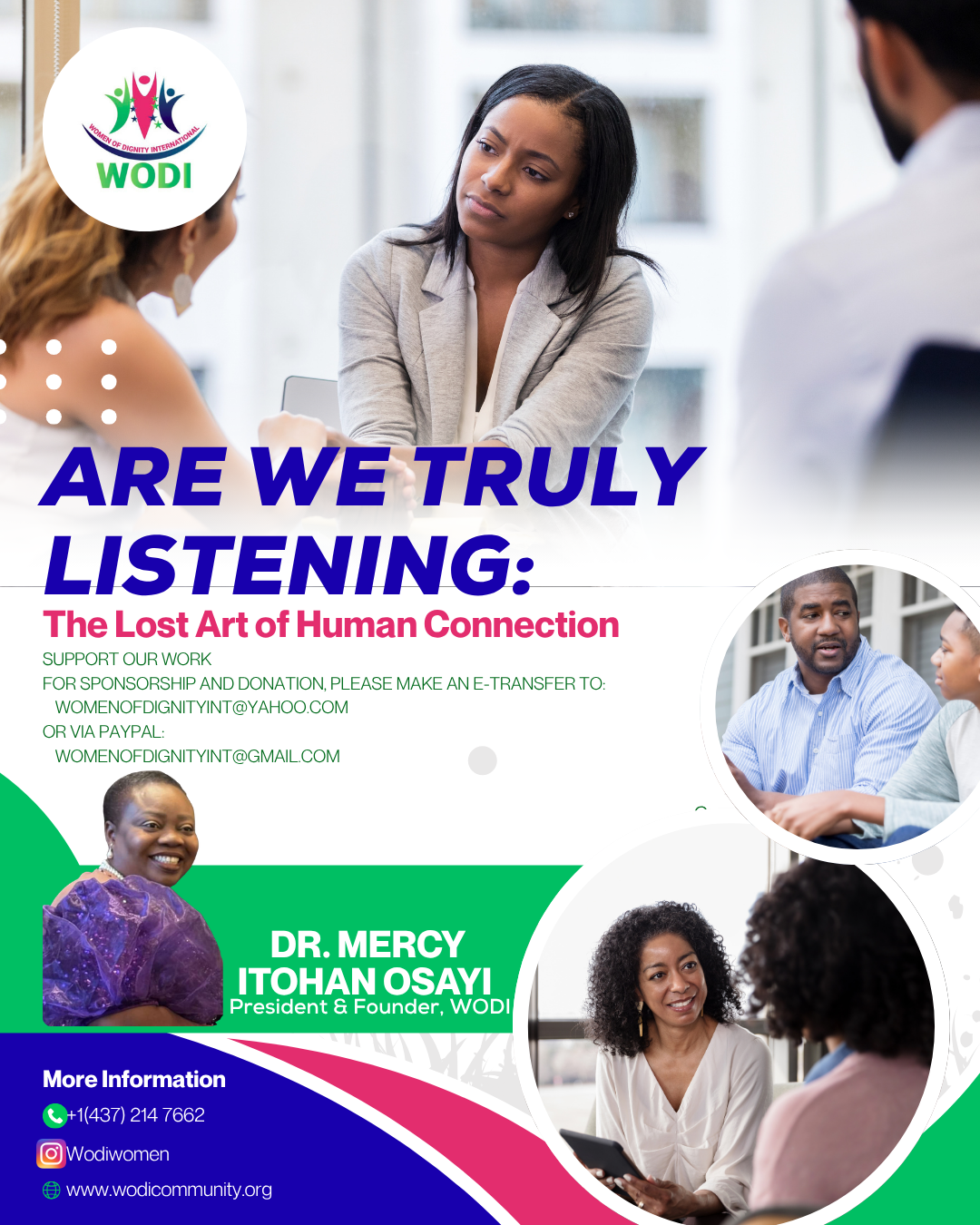
Are We Truly Listening? The Lost Art of Human Connection
Jul 15 2026
Are We Truly Listening? The Lost Art of Human Connection
We live in one of the most connected generations in history. With a single tap, we can send a message across the world, join a video call, or share our thoughts with hundreds of people in seconds. Yet, despite all these advances, many people have never felt more unheard.
We are surrounded by conversations, but genuine listening is becoming rare.
Too often, we listen just enough to reply instead of listening to understand. We interrupt, assume, judge, or become distracted by our phones while someone is pouring out their heart. In the process, we miss what people are really trying to say—not just with their words, but with their emotions.
Think about the last time someone asked, "How are you?" Did they truly wait to hear your answer? Or was it simply a greeting before moving on?
Many people are carrying burdens that cannot be seen. A teenager may be struggling with anxiety while appearing cheerful. A parent may be overwhelmed by financial pressures but continues to smile for the sake of the family. A senior may long for nothing more than someone to sit and have a meaningful conversation. Sometimes, what people need most is not advice or solutions—they simply need someone who is willing to listen.
Listening is one of the purest expressions of love and respect. It tells another person, "You matter. Your feelings matter. Your story matters."
Strong families are built on good communication. Children who know their parents will listen without immediately criticizing them are more likely to speak openly about their fears and mistakes. Couples who genuinely listen to one another strengthen trust and resolve conflicts more peacefully. Friendships grow deeper when people feel safe enough to share their thoughts without fear of being judged.
Communities also benefit when listening becomes a shared value. Many misunderstandings, conflicts, and divisions begin because people stop trying to understand one another. Whether differences are based on culture, age, religion, or personal opinions, respectful listening creates room for empathy and cooperation.
In Canada's diverse communities, where people come from different backgrounds and experiences, listening is more than good manners—it is an essential part of building inclusion. When we take time to hear another person's story, we begin to see the world through their eyes. That understanding breaks down barriers and builds stronger relationships.
Technology has made communication faster, but it has also made distraction easier. Family dinners are interrupted by notifications. Conversations compete with scrolling. Children notice when adults are physically present but mentally elsewhere. Sometimes, the greatest gift we can give the people we love is our full attention.
Imagine how different our homes, workplaces, schools, and communities would be if everyone felt heard. Many conflicts would be resolved before they escalated. Many lonely people would feel less isolated. Many young people would find the courage to ask for help. Healing often begins when someone finally feels understood.
Today, challenge yourself to listen differently. Put your phone aside during conversations. Ask meaningful questions. Resist the urge to interrupt. Give people the space to finish their thoughts. You may be surprised by how much you learn—not only about others, but about yourself.
Because sometimes, changing a life does not begin with speaking. It begins with listening.
From the WODI Perspective
At Women of Dignity International, we believe every voice deserves to be heard. Whether we are supporting women, empowering youth, caring for seniors, welcoming newcomers, or serving families through our community initiatives, we recognize that lasting change begins by listening with empathy. Every conversation is an opportunity to build trust, restore hope, and strengthen our communities.
WODI: Building an inclusive community for Women and Families!