
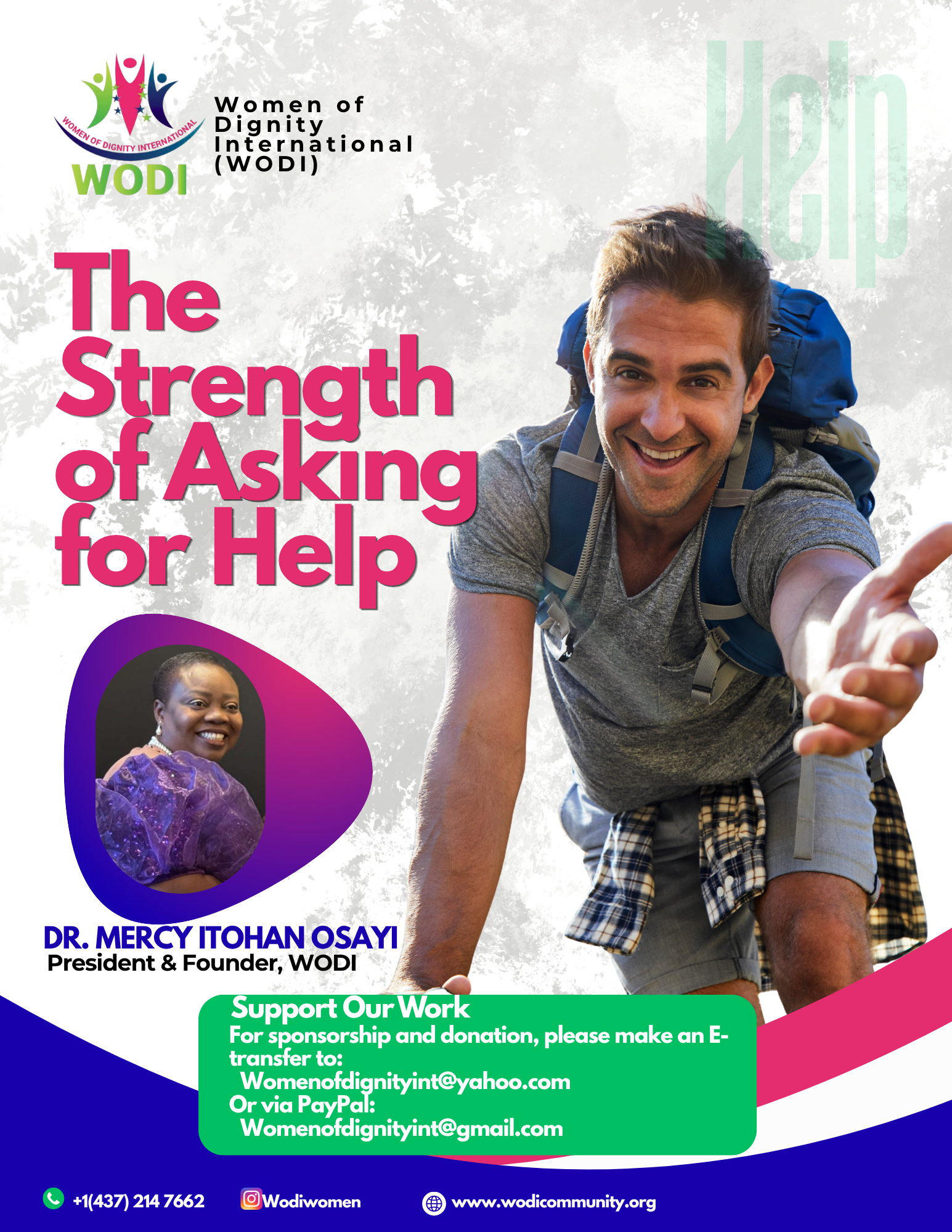
The Strength of Asking for Help
Aug 24 2026
The Strength of Asking for Help
There is a certain pressure many people carry—the belief that they should be able to handle everything on their own.
They keep going when they are tired. They smile when they are worried. They say, "I'm fine," even when they are not. They carry responsibilities at home, at work, and in their communities, while quietly hoping someone will notice that they are struggling.
But there is strength in asking for help.
We often teach children to be independent, and independence is important. However, independence should not mean believing that we must face every challenge alone. Knowing when to ask for support is also a sign of maturity, wisdom, and self-awareness.
Think about the parent who is overwhelmed but refuses to ask a family member for help. The caregiver who desperately needs a break but feels guilty about taking one. The young person struggling with school but afraid to admit they do not understand. The newcomer trying to navigate an unfamiliar system without knowing where to turn.
They may not need someone to solve everything for them.
Sometimes, they simply need someone to stand beside them.
Asking for help can feel uncomfortable because many people associate it with weakness. Some fear being judged. Others do not want to appear incapable. Some have spent so long being the person everyone depends on that they have forgotten what it feels like to depend on someone else.
But no one is strong all the time.
Even the people who support others need support themselves.
A healthy family should be a place where people can say, "I need help," without being made to feel ashamed. A healthy community should have resources and people willing to respond with compassion rather than judgment.
We also need to become better at offering help.
Instead of waiting for someone to say they are struggling, we can check in. Instead of saying, "Let me know if you need anything," we can sometimes be more specific: "Can I pick up some groceries for you?" "Would you like me to watch the children for an hour?" "Can I sit with you?" "Would you like me to help you find the information you need?"
Practical support can be easier to accept than a general offer.
We should also teach our children that asking questions is not something to be embarrassed about. A child who asks for help with homework, a young person who speaks to a trusted adult about a difficult situation, or an adult who seeks professional support during a challenging season is not failing.
They are taking responsibility for their well-being.
Strong communities are built by people who understand both how to give and how to receive.
There will be seasons when you are the person offering the helping hand. There will also be seasons when you are the one reaching for it.
Both are part of being human.
So, if you are carrying something heavy today, you do not have to carry it alone.
Speak to someone you trust. Reach out to your family. Connect with a community organisation. Seek professional support when necessary.
Asking for help does not take away your strength.
Sometimes, it is exactly how you find it again.
From the WODI Perspective
At Women of Dignity International, we believe that no individual or family should feel ashamed to seek support. Through our community programmes, Food Bank, Senior Care, youth initiatives, empowerment activities, and outreach efforts, we work to create spaces where people can find practical support, connection, and dignity.
Let us build communities where asking for help is met with compassion—not judgment—and where everyone knows that they have somewhere to turn.
WODI: Building an inclusive community for Women and Families!